
Sheepskin and shearling slippers
Two words often used for the same thing. Here is what they usually mean and how they wear.
Disclosure: We may earn a commission if you buy through links on this page. It does not change what we recommend. Affiliate Disclosure
What the words usually mean
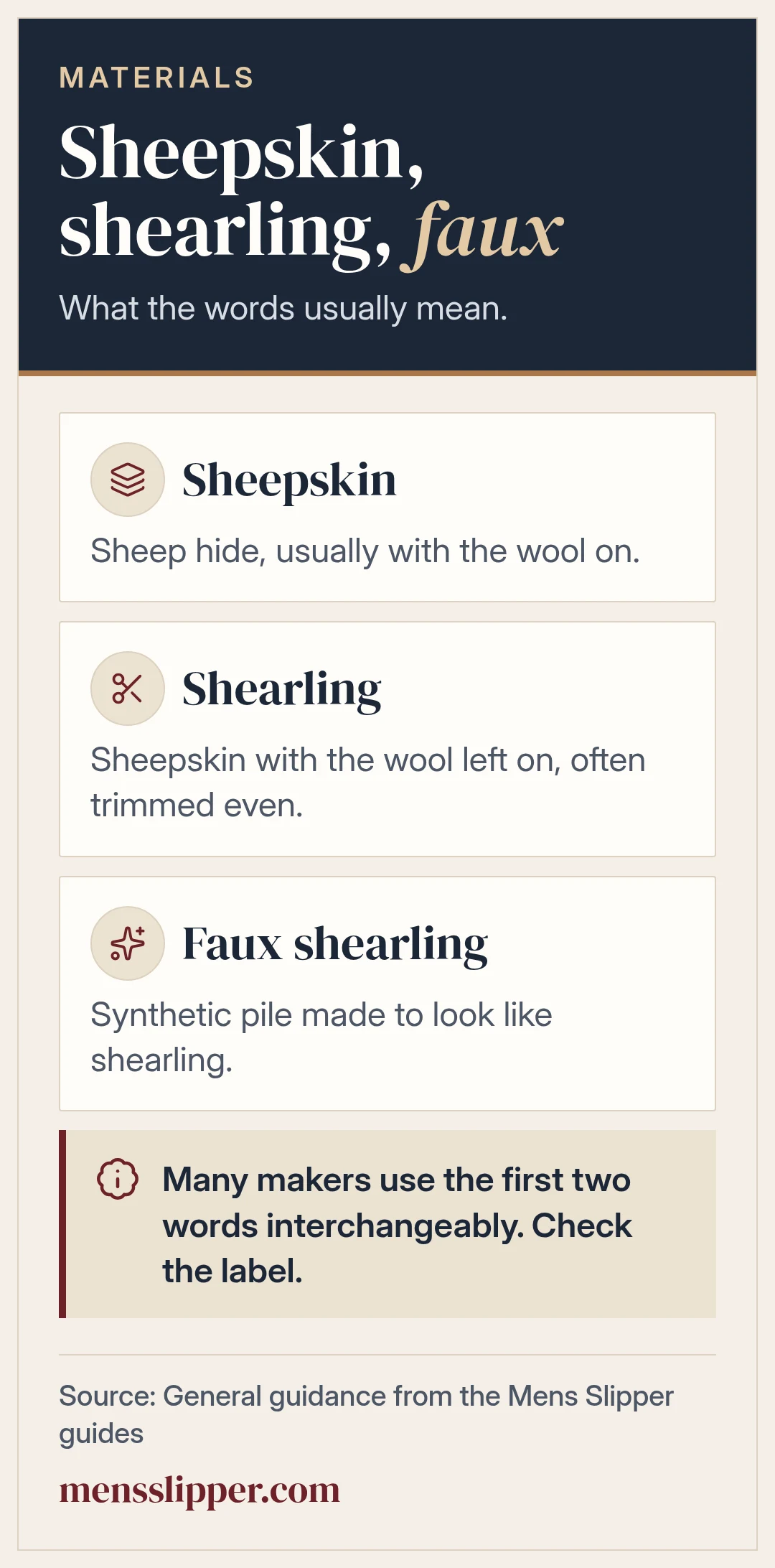
Sheepskin is the hide of a sheep. In slippers, it usually means the hide with the wool still attached, so the wool side faces your foot.
Shearling usually means sheepskin tanned with the wool left on, often with the wool trimmed to an even length. In everyday use, many makers use the two words interchangeably.
Faux shearling or sherpa is a synthetic pile fabric made to look like shearling.
How to read the label
The label or listing is the only reliable guide to what a slipper is made of. Look for how the maker describes the upper, the lining, and the sole separately. For example: "The maker lists the upper as suede leather." If a listing uses vague words like "plush" or "cozy lining", it may not be sheepskin at all.
How it wears
- The wool pile compresses with wear, so a new pair often feels snugger than it will later.
- Suede-side uppers can mark and stain. See the cleaning guide.
- Many people wear sheepskin without socks.
Sensitivities
If you are sensitive to wool, latex, or other materials, check the label and the maker's materials list before you buy.
FAQ
General information, not medical advice. If you have foot pain, diabetes, or circulation problems, ask a doctor or podiatrist before choosing footwear.
Related guides
Size it right
Why many sheepskin pairs start snug.
